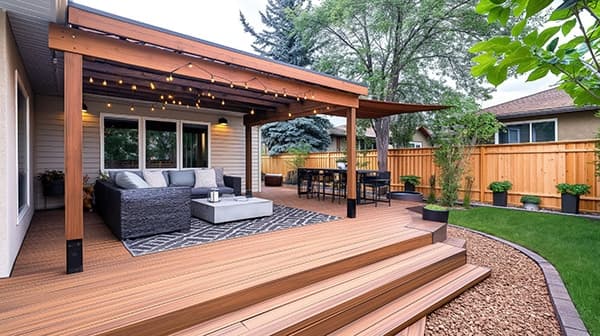
Do You Need Council Approval for a Deck in Australia?
A practical guide to the deck details that can change the council approval pathway, including height, area, setbacks, privacy, and overlays.
This article is general planning guidance, not legal advice. Rules vary by property, council, state, overlays, and project details. Confirm the final pathway with council or a qualified professional before you build or lodge.
Short answer: a deck may be exempt, fast-tracked, or require a full approval pathway. The answer depends on the state, council area, address, height, size, setbacks, privacy impacts, and whether the site has constraints such as heritage, bushfire, or flood mapping.
This is general guidance only. Do not rely on it as legal or planning advice for a specific property.
The deck details that usually matter
Deck approvals often turn on a handful of practical details:
- Height above existing ground level
- Total deck area
- Distance to side and rear boundaries
- Whether the deck is attached to the dwelling
- Whether it includes a roof, privacy screen, stairs, balustrade, or retaining work
- Whether it overlooks neighbours
- Whether the site is heritage listed or in a heritage area
- Whether the land is bushfire prone or flood prone
- Whether the deck affects drainage, trees, or easements
If any of these details are unknown, the approval answer becomes less certain.
Low decks can still have rules
People often assume low decks are automatically fine. Sometimes they are simpler, but they still need to meet the relevant standards.
A low deck near a boundary, on constrained land, attached to a heritage item, over an easement, or with drainage impacts can still need careful checking.
For builders and carpenters, this is why a quick "no worries" can become expensive. The problem is not only the deck. It is the deck plus the property.
Why state vocabulary changes the conversation
In NSW, the conversation may be about exempt development, a CDC, or a DA. In Victoria, customers often ask about planning permits and building permits. In Queensland, the terms accepted development, code assessable, and impact assessable may appear.
The words change, but the workflow is similar: check the address, check the constraints, check the project details, then decide the likely pathway.
Questions to answer before quoting
Before a fixed deck quote, collect:
- The exact address
- Approximate deck length and width
- Height above ground at the highest point
- Whether it is attached to the house
- Whether it has a roof or is part of a larger outdoor living structure
- Distance to boundaries
- Whether privacy screening is needed
- Whether there are trees, easements, drainage pits, or slopes nearby
This helps a tradie separate a ready-to-quote job from a lead that needs approval guidance first.
What a customer-facing deck approval guide should include
A useful guide should show:
- The likely approval pathway
- Why that pathway may apply
- The known site constraints
- Questions still needing confirmation
- A document checklist
- Who to speak to next
- A clear disclaimer that council, a certifier, or a planner may need to confirm the final answer
That is the sort of guide ApprovalPath is built to create. See the deck project overview, and if you quote decks for a living, the pre-quote question checklist goes deeper.
Sources checked
Keep reading
Related approval guides
Do You Need Council Approval for a Pergola or Patio?
Pergolas, patios, and verandahs can trigger different approval pathways depending on roof type, size, height, attachment, and site constraints.
Do You Need Council Approval for a Shed?
A practical guide to shed approval questions, including size, height, setbacks, slab, use, overlays, and whether the shed is really a garage or studio.
What to Ask Before Quoting a Deck, Patio or Pergola
A practical pre-quote checklist for deck builders, patio builders, pergola installers, and landscapers handling council approval questions.